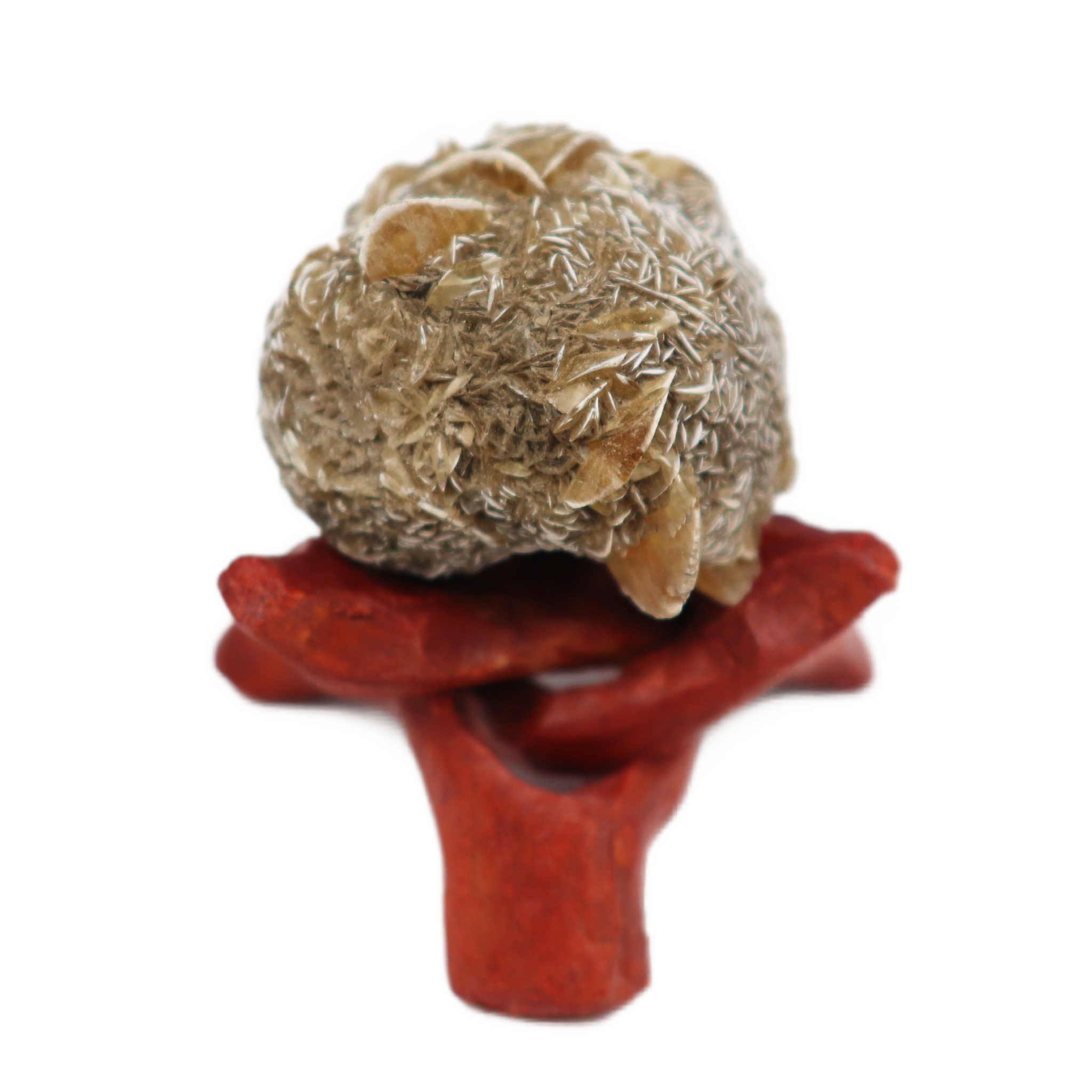
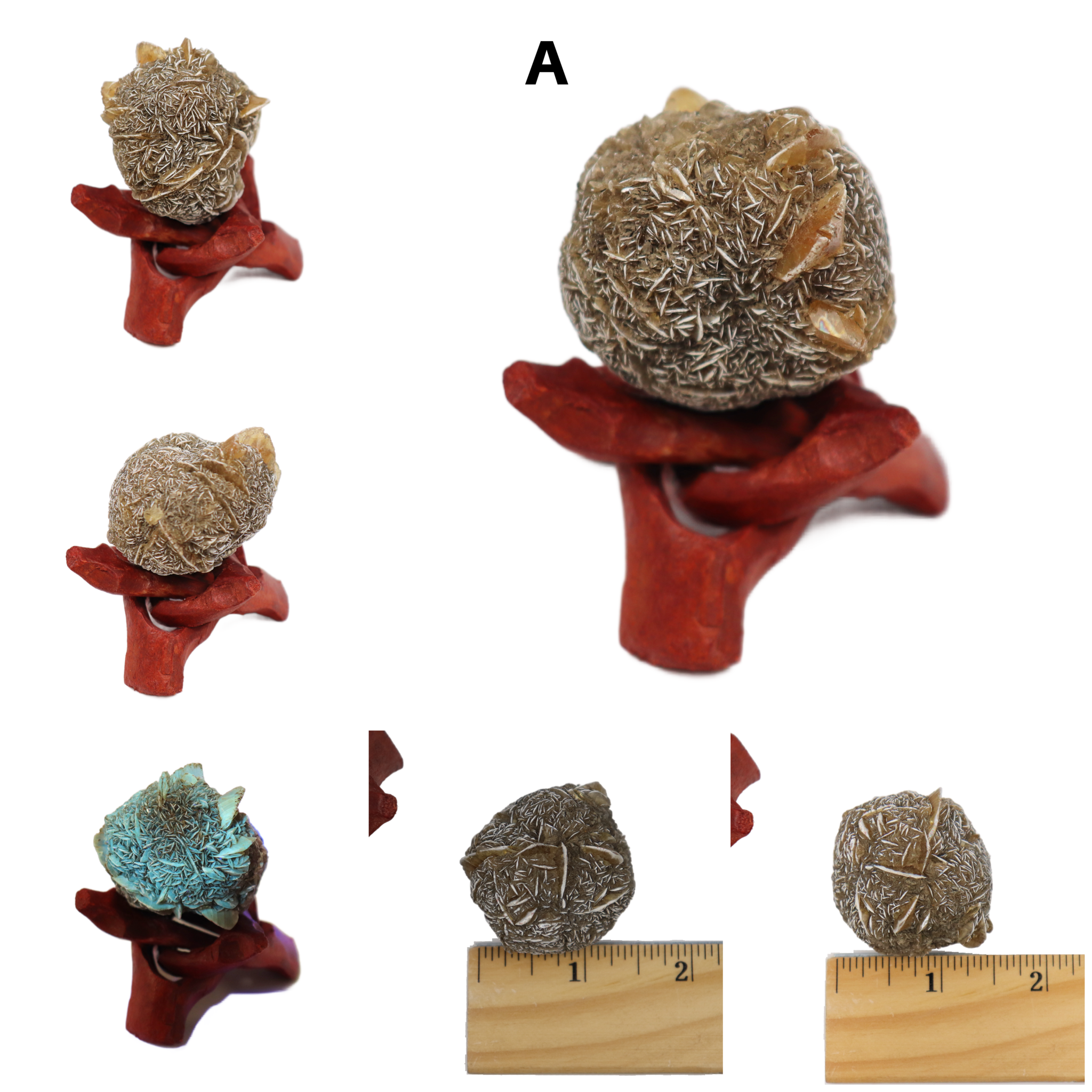
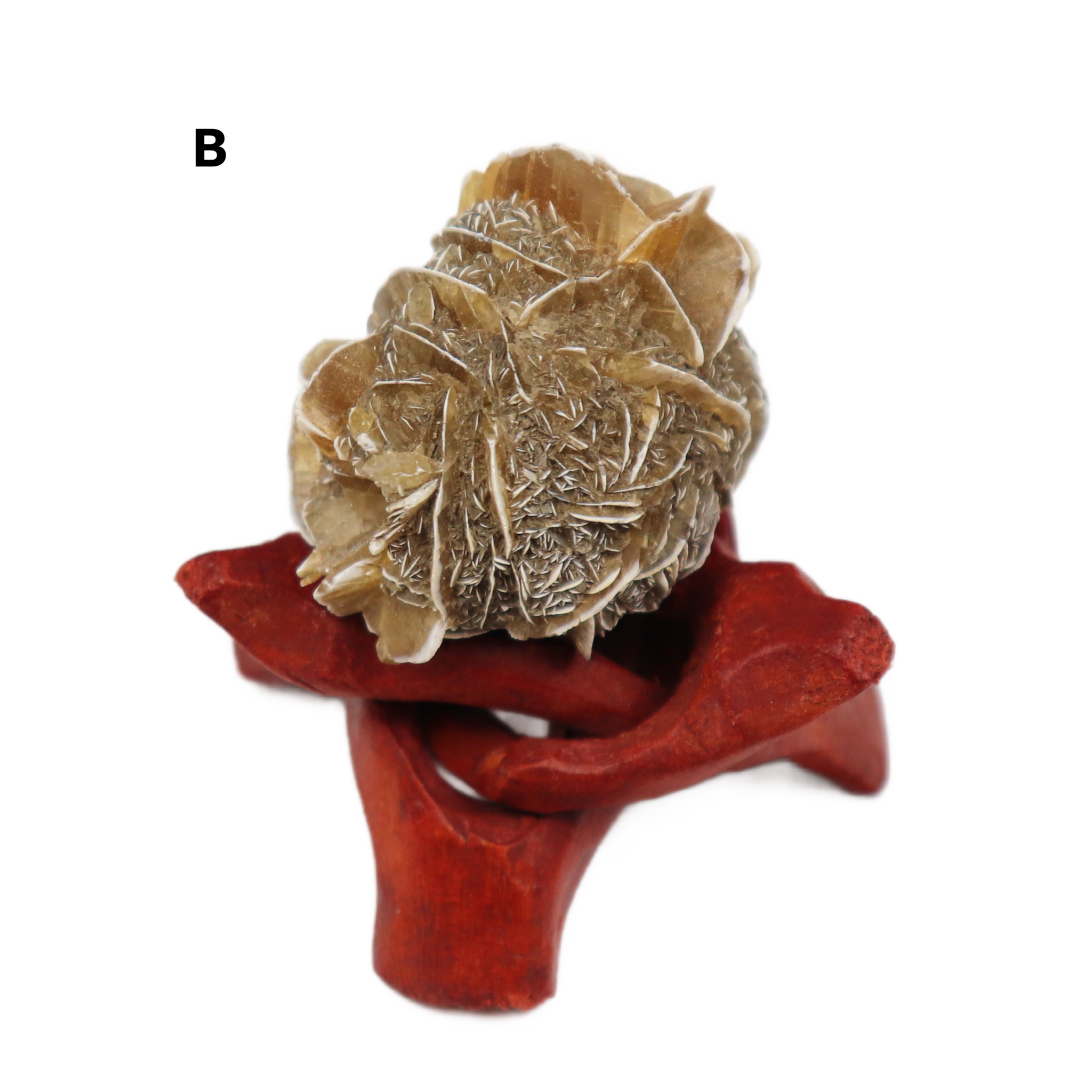
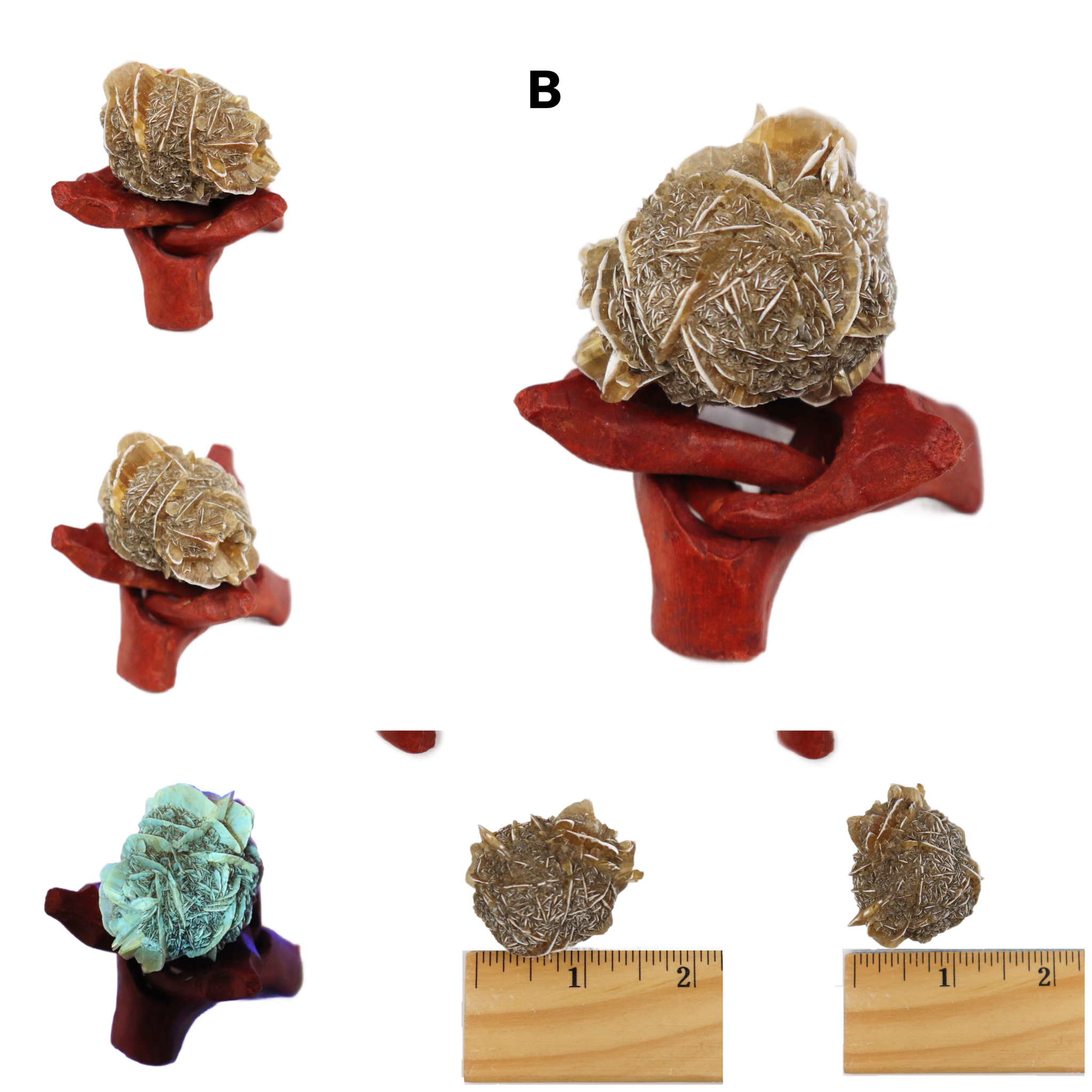
A rare find! Gypsum var. Duckbill Selenite Floater Red River Valley Spillway, Winnipeg, Manitoba, CAN. A 1 1/2 " x 1 1/2" small cabinet specimen.
Duckbill Selenite Floater – Red River Valley, North Dakota
A distinctive little treasure with an extraordinary shape! This unusual Duckbill Selenite Floater comes from the Red River Valley Spillway near Winnipeg, Manitoba, Canada. Measuring approximately 1 1/2" inches in overall length. Its unusual form, attractive coloration, and natural crystal structure make it a wonderful addition to a mineral collection or display cabinet.
The name “Duckbill Selenite” comes from the distinctive shape of these crystals, which resembles the broad bill of a duck. Selenite specimens from this locality are also known for their occasional twinning, adding another layer of interest to an already unusual mineral formation.
What Makes a Floater Crystal Special?
A floater crystal forms without being attached to a host rock or surrounding matrix. Because it grows freely within its environment, a floater can develop crystal faces on multiple sides rather than having one side hidden or restricted by its point of attachment. Well-preserved floater specimens are especially appealing to collectors because they offer an opportunity to appreciate the crystal's natural form from every angle.
A Little Light Makes a Big Difference
Selenite from the Red River Valley locality is known for its fluorescence under ultraviolet (UV) light. Depending on the specimen, it may glow a beautiful blue-white or champagne color. This additional feature makes these North Dakota specimens especially interesting to collectors who enjoy exploring the optical properties of minerals.
Mineralogy: Selenite (Gypsum)
Selenite is a transparent to translucent crystalline variety of gypsum, a hydrated calcium sulfate mineral with the chemical formula CaSO₄·2H₂O. Gypsum is a relatively soft mineral, measuring approximately 2 on the Mohs hardness scale. It commonly forms in sedimentary environments through the evaporation of mineral-rich water.
Although gypsum is found throughout the world, it can develop into remarkably varied crystal forms. Some of the most impressive selenite formations are found in Mexico, including the famous giant crystals of Naica. This small North Dakota specimen offers something different: an unusual natural shape, free-growing crystal formation, and locality-specific fluorescence.
Specimen Details:
-
Mineral: Gypsum, variety Selenite
-
Distinctive Form: Duckbill Floater
-
Locality: Red River Valley, Fargo, Cass County, North Dakota, USA
-
Approximate Dimensions: 1¼" × 1¼" crystal; 2" overall length
-
Additional Features: Golden selenite crystals at either end; locality known for twinned crystals and UV fluorescence
-
UV Response: Blue-white or champagne fluorescence may be observed under ultraviolet light
A fascinating example of how wonderfully varied natural minerals can be, this Duckbill Selenite Floater is a small but memorable specimen for collectors of unusual gypsum formations and North American minerals.
Natural mineral specimens vary in shape, color, texture, and surface features. Each piece is unique.